
- Why Does Using a Laptop Cause Neck and Shoulder Pain?
- The Most Common Laptop Posture Mistakes at Work
- Laptop Screen Too Low Causing Neck Pain
- Forward Head Posture From Laptop Use
- Poor Laptop Posture and Shoulder Pain: The Hidden Connection
- Ergonomic Mistakes While Using a Laptop
- How Laptop Use Affects Neck and Shoulders Over Time
- Signs Your Laptop Setup Is Causing Pain
- What Is the Best Sitting Posture When Working on a Laptop?
- Laptop Workstation Setup for Better Posture
- Correct Laptop Posture for Neck Pain Relief
- How to Prevent Shoulder Pain While Using a Laptop
- Laptop Neck Pain Exercises and Stretches
- Laptop-Related Musculoskeletal Pain Symptoms You Should Not Ignore
- The Biggest Myth About Laptop Ergonomics
Laptop users often blame long working hours for neck and shoulder pain, but the real problem is frequently the way they sit and interact with their devices. Unlike desktop computers, laptops combine the screen and keyboard into a single unit, making it difficult to maintain a healthy posture. Over time, even small positioning errors can place significant strain on the neck, shoulders, upper back, and spine. Understanding the most common laptop posture mistakes that lead to neck and shoulder pain can help prevent discomfort, improve productivity, and reduce the risk of long-term musculoskeletal problems.
Why Does Using a Laptop Cause Neck and Shoulder Pain?
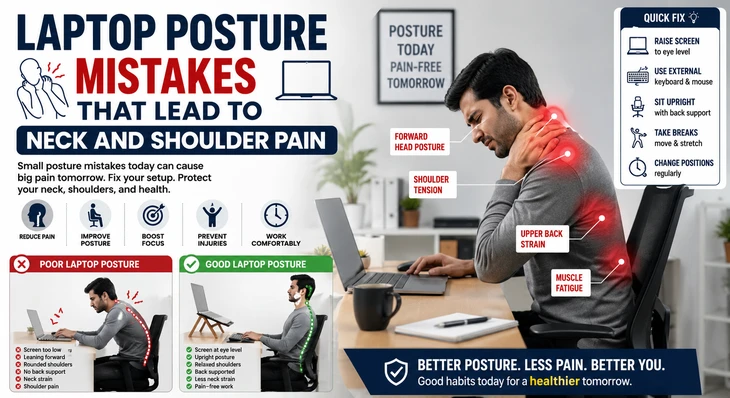
A laptop's design encourages users to look downward toward the screen while reaching forward to type. This position often causes the head to drift forward and the shoulders to round inward. When this posture is maintained for hours every day, muscles become overworked and joints experience increased stress. Common effects include:
- Neck stiffness
- Shoulder tension
- Upper back pain
- Headaches
- Reduced mobility
- Muscle fatigue
The Most Common Laptop Posture Mistakes at Work
Many office workers unknowingly develop unhealthy habits while working. Some of the most common laptop posture mistakes at work include:
- Looking down at the screen for long periods
- Leaning forward toward the laptop
- Sitting without back support
- Raising the shoulders while typing
- Working from a couch or bed
- Keeping the laptop too low
- Remaining in one position for hours
These habits may seem harmless initially, but they often lead to chronic discomfort over time.
Laptop Screen Too Low Causing Neck Pain
One of the biggest ergonomic issues is a screen positioned below eye level. A laptop screen too low, causing neck pain, is extremely common because most laptop screens sit 20–40 degrees below the user's natural gaze. When you constantly look downward:
- Neck muscles remain contracted
- Cervical spine pressure increases
- The upper trapezius muscles become tight
- Headaches become more frequent
Research has shown that every inch the head moves forward increases the load on the neck significantly.
Quick Fix
Raise the laptop screen using:
- A laptop stand
- Adjustable desk riser
- Stack of sturdy books
The top of the screen should be close to eye level.
Forward Head Posture From Laptop Use
Perhaps the most damaging posture issue is forward head posture from laptop use. Forward head posture occurs when the head shifts ahead of the shoulders rather than remaining aligned over the spine. Signs include:
- Chin sticking forward
- Rounded upper back
- Tight neck muscles
- Shoulder discomfort
- Frequent tension headaches
Over time, this posture changes muscle balance throughout the upper body.
Why It Matters
A human head weighs roughly 10–12 pounds (4.5–5.5 kg). When positioned forward:
- Neck muscles work harder
- Shoulder muscles become overloaded
- Joint stress increases
- Fatigue develops faster
The farther the head moves forward, the greater the strain.
Poor Laptop Posture and Shoulder Pain: The Hidden Connection
Many people associate laptops only with neck discomfort, but poor laptop posture and shoulder pain are closely connected. When users lean toward the screen:
- Shoulders roll forward
- Chest muscles tighten
- Upper back muscles weaken
- Shoulder blades lose proper alignment
This imbalance creates tension throughout the shoulder complex.
Shoulder Pain From Working on a Laptop Often Feels Like:
- Burning between the shoulder blades
- Tightness in the upper shoulders
- Aching near the collarbone
- Difficulty lifting the arms comfortably
- Stiffness after work
Ignoring these symptoms can eventually lead to chronic muscle dysfunction.
Ergonomic Mistakes While Using a Laptop
Several daily habits contribute directly to discomfort.
Using a Laptop on the Lap
Despite the name, laptops are not designed for prolonged use on your lap. Problems include:
- Excessive neck bending
- Rounded shoulders
- Poor wrist alignment
Working From the Couch
Soft furniture encourages slouching and unsupported sitting. This position increases pressure on:
- Neck muscles
- Lower back
- Shoulder joints
Reaching Too Far Forward
If the laptop is placed far from the body:
- Arms extend excessively
- Shoulders elevate
- Upper trapezius muscles tighten
These are among the most overlooked ergonomic mistakes while using a laptop.
How Laptop Use Affects Neck and Shoulders Over Time
Many posture-related injuries develop gradually. Understanding how laptop use affects neck and shoulders helps explain why symptoms often appear months or years later.
Early Symptoms
- Mild stiffness
- Occasional soreness
- Fatigue after work
Intermediate Symptoms
- Frequent neck pain
- Tight shoulders
- Reduced flexibility
Advanced Symptoms
- Chronic pain
- Persistent muscle tension
- Nerve irritation
- Reduced work performance
The earlier posture problems are addressed, the easier they are to correct.
Signs Your Laptop Setup Is Causing Pain
Not all discomfort is caused by injury. Sometimes your workstation itself is the problem. Common signs your laptop setup is causing pain include:
- Pain improves on weekends
- Symptoms worsen after long work sessions
- Frequent shoulder tension
- Neck stiffness by afternoon
- Headaches near the end of the day
- Relief after changing positions
If these patterns sound familiar, workstation adjustments may be necessary.
What Is the Best Sitting Posture When Working on a Laptop?
The best sitting posture when working on a laptop is one that keeps the body in a neutral position. Follow these guidelines:
Head and Neck
- Head aligned above the shoulders
- Chin slightly tucked
- Eyes level with the screen
Shoulders
- Relaxed and neutral
- Not elevated or rounded
Arms
- Elbows near the body
- Bent around 90 degrees
Back
- Supported by the chair
- Natural spinal curves are maintained
Feet
- Flat on the floor
- Knees at approximately hip height
Maintaining this position reduces unnecessary muscle strain.
Laptop Workstation Setup for Better Posture
A proper laptop workstation setup for better posture dramatically reduces discomfort.
Essential Components
External Keyboard
Allows the screen to be raised without affecting typing position.
External Mouse
Prevents awkward shoulder positioning.
Laptop Stand
Raises the screen to eye level.
Ergonomic Chair
Supports the spine and encourages neutral posture.
Ideal Setup Checklist
- Screen at eye level
- Keyboard at elbow height
- Wrists neutral
- Feet supported
- Frequently used items within easy reach
These adjustments form the foundation of effective laptop ergonomics for preventing neck pain.
Correct Laptop Posture for Neck Pain Relief
If pain already exists, improving posture can reduce stress on irritated tissues. The correct laptop posture for neck pain relief includes:
- Sit upright with lumbar support.
- Raise the laptop screen.
- Use an external keyboard.
- Keep shoulders relaxed.
- Position elbows close to the body.
- Avoid leaning toward the screen.
- Change positions regularly.
Many people experience noticeable improvement within weeks of making these adjustments.
How to Prevent Shoulder Pain While Using a Laptop
Prevention is far easier than treatment. To prevent shoulder pain while using a laptop, focus on reducing muscle overload.
Practical Strategies
- Take movement breaks every 30–60 minutes
- Keep shoulders relaxed
- Avoid cradling the phone between your shoulder and ear
- Stretch throughout the day
- Alternate between sitting and standing
- Use proper workstation ergonomics
Small adjustments performed consistently often deliver the greatest benefits.
Laptop Neck Pain Exercises and Stretches
Exercise helps counteract the effects of prolonged sitting. These simple laptop neck pain exercises and stretches can be performed throughout the day.
Chin Tucks
Purpose:
- Correct forward head posture
How:
- Sit upright.
- Pull the chin backward gently.
- Hold for 5 seconds.
- Repeat 10 times.
Upper Trapezius Stretch
Purpose:
- Reduce neck and shoulder tension
How:
- Tilt your head to one side.
- Hold 20–30 seconds.
- Repeat on both sides.
Shoulder Blade Squeezes
Purpose:
- Strengthen postural muscles
How:
- Pull shoulder blades together.
- Hold 5 seconds.
- Repeat 10–15 times.
Chest Stretch
Purpose:
- Counter rounded shoulders
How:
- Stand in a doorway.
- Place forearms on the frame.
- Lean forward gently.
Performing these exercises several times daily can help reduce neck strain from prolonged laptop use.
Laptop-Related Musculoskeletal Pain Symptoms You Should Not Ignore
While mild discomfort is common, certain symptoms deserve attention. Potential laptop-related musculoskeletal pain symptoms include:
- Persistent neck pain
- Shoulder weakness
- Numbness in arms or hands
- Tingling sensations
- Limited neck movement
- Pain that disrupts sleep
If symptoms persist despite ergonomic improvements, professional evaluation may be necessary.
The Biggest Myth About Laptop Ergonomics
Many people believe buying an expensive chair automatically fixes posture problems. In reality, posture depends on:
- Screen position
- Keyboard placement
- Work habits
- Movement frequency
- Muscle conditioning
Even the best chair cannot compensate for a poorly positioned laptop.
Building Healthier Laptop Habits for Long-Term Comfort
Most neck and shoulder problems linked to laptops develop from repeated daily habits rather than a single event. The good news is that small changes can produce significant improvements. To avoid laptop posture causing neck and shoulder pain, focus on:
- Raising the screen to eye level
- Maintaining neutral spinal alignment
- Taking regular movement breaks
- Using external accessories when possible
- Strengthening postural muscles
- Correcting forward head posture
Understanding the laptop posture mistakes that lead to neck and shoulder pain allows you to create a healthier workspace, reduce discomfort, and protect your neck and shoulders from long-term strain. Consistent ergonomic habits are often the most effective solution for lasting comfort and productivity.