
- Why Does Sciatica Hurt More When Driving?
- How the Sciatic Nerve Responds to Prolonged Sitting
- Common Symptoms of Sciatica During Long Car Trips
- Why Long Distance Driving Creates the Perfect Conditions for Sciatica Flare-Ups
- Can Driving Long Distances Cause Sciatica?
- The Connection Between Herniated Discs and Driving Pain
- Signs Your Car Seat May Be Making Sciatica Worse
- Best Sitting Position for Sciatica While Driving
- How to Prevent Sciatica Pain During Long Drives
- Simple Exercises to Reduce Sciatica During Road Trips
- Mistakes That Often Make Sciatica Worse While Driving
- When Sciatica While Driving May Need Medical Attention
- Making Long Car Trips More Comfortable With Sciatica
Sciatica can turn a comfortable drive into a painful experience, especially during long road trips. Many people notice that their leg pain, numbness, or tingling becomes significantly worse after spending hours behind the wheel. Whether the discomfort starts in the lower back, buttock, or travels down the leg, prolonged driving often creates the perfect conditions for sciatic nerve irritation. The frustrating part is that even people whose symptoms are manageable during daily activities may experience a sudden flare-up while driving. Understanding why this happens can help you make simple adjustments that reduce pressure on the sciatic nerve and keep pain under control during travel.
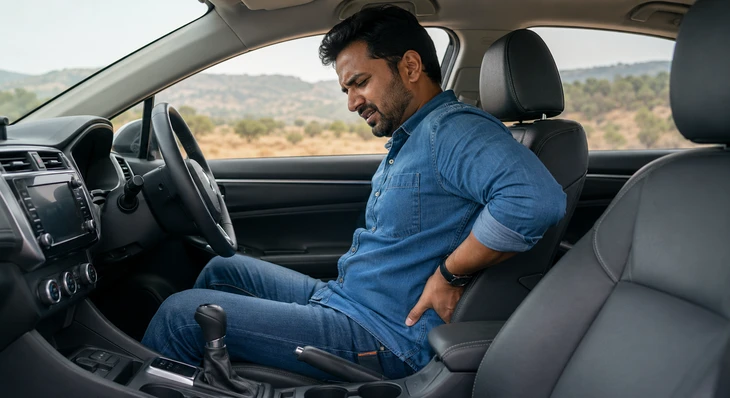
Why Does Sciatica Hurt More When Driving?
Driving combines several factors that commonly aggravate sciatic nerve pain. When you sit in a car for an extended period:
- The hips remain flexed for long periods.
- The lower spine stays in a fixed position.
- Blood circulation decreases.
- Muscles become stiff and tight.
- Pressure builds around the lumbar spine and pelvis.
This combination can increase nerve compression and trigger radiating leg pain. Many people with a herniated disc, spinal stenosis, or piriformis syndrome find that sitting is one of their biggest triggers. Driving adds vibration from the road, limited movement, and poor seat ergonomics, making symptoms even worse.
Quick Answer
Sciatica often gets worse during long car trips because prolonged sitting increases pressure on the lower back and sciatic nerve, reduces mobility, tightens surrounding muscles, and may worsen nerve root irritation.
How the Sciatic Nerve Responds to Prolonged Sitting
The sciatic nerve is the largest nerve in the body. It begins in the lower spine and travels through the buttocks and down each leg. When you sit for long periods:
- Lumbar discs experience increased pressure.
- Hip muscles tighten.
- Pelvic alignment may change.
- Nerve pathways become compressed.
Over time, these changes can create:
- Burning leg pain
- Tingling sensations
- Leg numbness
- Sharp shooting pain
- Weakness in the leg
The longer the sitting period, the greater the stress on irritated nerve tissues.
Common Symptoms of Sciatica During Long Car Trips
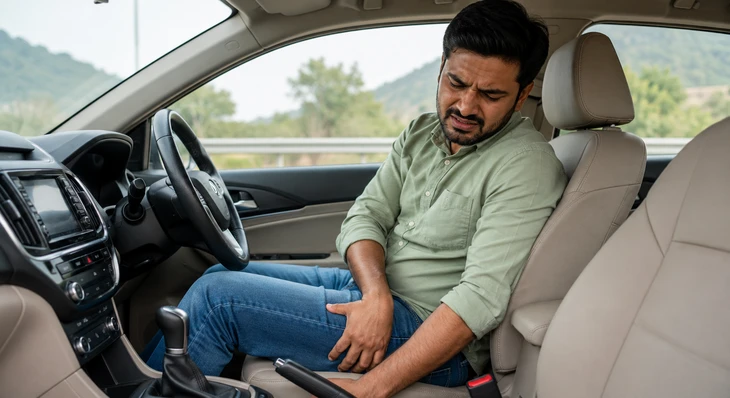
Symptoms vary from person to person, but certain complaints are especially common during extended driving.
Pain That Travels Down the Leg
Many drivers notice pain starting in the lower back or buttock before extending into the thigh, calf, or foot.
Numbness in the Leg While Driving
Reduced movement can increase nerve compression, leading to temporary numbness. Symptoms may include:
- Foot numbness
- Tingling toes
- Reduced sensation in the calf
- Heavy feeling in one leg
Burning or Electric-Shock Sensations
Some people describe their sciatic nerve pain as:
- Burning
- Stabbing
- Electric-like
- Sharp and sudden
These sensations often become more noticeable during highway driving when movement is minimal.
Increased Pain After Getting Out of the Car
A common sign of driving-related sciatica is stiffness and pain immediately after standing up. The first few steps may feel uncomfortable because muscles and nerves have been compressed for an extended period.
Why Long Distance Driving Creates the Perfect Conditions for Sciatica Flare-Ups
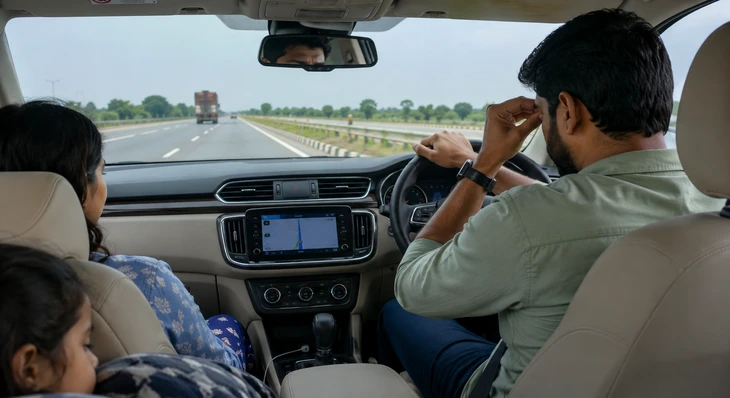
Several factors combine during road trips to irritate the sciatic nerve.
Poor Driving Posture
Many drivers unknowingly:
- Slouch forward
- Round their lower back
- Lean to one side
- Sit too far from the pedals
Poor posture increases stress on spinal structures and surrounding tissues.
Continuous Pressure on the Lower Back
The lumbar spine absorbs significant pressure while sitting. Research has consistently shown that seated positions can place more stress on spinal discs than standing. For people with existing lumbar disc problems, this added pressure can worsen symptoms.
Limited Movement
During walking, muscles regularly contract and relax. Driving reduces this natural movement. As a result:
- Muscles stiffen
- Circulation decreases
- Joint mobility reduces
- Nerve irritation increases
Vehicle Vibration
Even smooth roads create subtle vibrations. Over long distances, these vibrations can contribute to lower back discomfort and sciatic nerve irritation.
Can Driving Long Distances Cause Sciatica?
Driving itself usually does not cause sciatica in healthy individuals. However, long-distance driving can contribute to the development or worsening of symptoms when underlying issues already exist. Examples include:
- Herniated discs
- Degenerative disc disease
- Spinal stenosis
- Piriformis syndrome
- Previous lower back injuries
In these situations, prolonged sitting can aggravate existing nerve compression and trigger pain.
The Connection Between Herniated Discs and Driving Pain
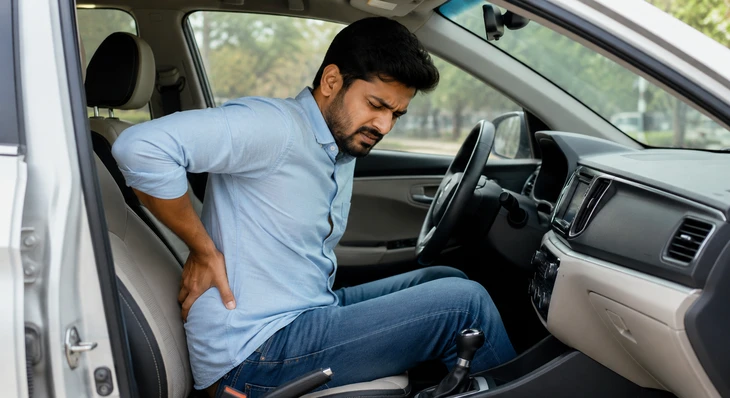
A herniated disc is one of the most common causes of sciatica. The discs between spinal bones act as shock absorbers. When a disc bulges or ruptures, it may press on nearby nerve roots. Driving can increase symptoms because:
- Sitting increases disc pressure.
- Lumbar support is often inadequate.
- Road vibration adds repetitive stress.
- The spine remains in one position for long periods.
People with disc-related sciatica frequently report worse pain during long car trips than during many other daily activities.
Signs Your Car Seat May Be Making Sciatica Worse
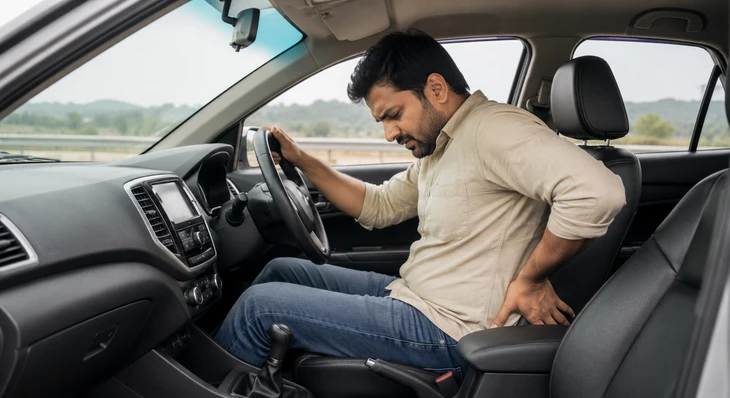
Many vehicles prioritize general comfort rather than spinal support. Your seat may be contributing to symptoms if you notice:
- Increased pain within 30 minutes of driving
- Lower back fatigue
- Buttock pain while sitting
- Numbness in one leg
- Constant shifting to find a comfortable position
Other warning signs include:
- Seat tilted too far backward
- Lack of lumbar support
- Seat positioned too low
- Steering wheel too far away
Even small adjustments can make a noticeable difference.
Best Sitting Position for Sciatica While Driving
Proper driving posture can significantly reduce stress on the lower back and sciatic nerve.
Position Your Seat Correctly
Aim for:
- Hips level with or slightly higher than knees
- Knees slightly bent
- Easy access to pedals
- Relaxed shoulders
Maintain Natural Spinal Curves
Keep the lower back supported. Avoid:
- Slouching
- Leaning forward
- Twisting while driving
Adjust the Steering Wheel
The steering wheel should allow your elbows to remain slightly bent. This reduces unnecessary strain on the back and shoulders.
Use Lumbar Support
A small lumbar support cushion can help maintain healthy spinal alignment during long trips.
How to Prevent Sciatica Pain During Long Drives
Preventing a flare-up is often easier than managing one after it starts.
Take Frequent Movement Breaks
One of the most effective strategies is to stop regularly. Try to:
- Get out every 45–60 minutes
- Walk for several minutes
- Stretch gently
- Change positions
Even short breaks can reduce nerve compression.
Stretch Before Leaving
Preparing the body before driving can improve mobility. Helpful stretches often target:
- Hamstrings
- Hip flexors
- Gluteal muscles
- Lower back muscles
Avoid Keeping a Wallet in Your Back Pocket
Sitting on a thick wallet can create uneven pressure on the pelvis and irritate the sciatic nerve.
Stay Hydrated
Adequate hydration supports spinal disc health and overall tissue function.
Avoid Driving Immediately After Heavy Physical Activity
Muscles and tissues may already be irritated after strenuous exercise or lifting. Adding hours of sitting immediately afterward can increase the likelihood of symptoms.
Simple Exercises to Reduce Sciatica During Road Trips
Certain movements can help reduce stiffness and maintain mobility.
Standing Back Extensions
These gentle movements encourage spinal mobility after prolonged sitting.
Walking
Walking improves circulation and reduces muscle tightness.
Gentle Hamstring Stretching
Tight hamstrings can increase tension around the pelvis and lower back.
Glute Activation Exercises
Activating glute muscles may help improve pelvic stability and reduce pressure on surrounding structures. Always perform exercises within a comfortable range and stop if symptoms worsen.
Mistakes That Often Make Sciatica Worse While Driving
Many people unintentionally aggravate their symptoms. Common mistakes include:
- Driving for several hours without breaks
- Sitting with poor posture
- Ignoring early warning signs
- Using unsupportive seating positions
- Keeping the seat too reclined
- Remaining inactive after reaching the destination
Addressing these habits often leads to noticeable symptom improvement.
When Sciatica While Driving May Need Medical Attention
Occasional discomfort may improve with posture correction and movement. However, medical evaluation may be necessary if symptoms include:
- Progressive leg weakness
- Persistent numbness
- Severe radiating pain
- Difficulty walking
- Symptoms that continue to worsen
- Pain that interferes with daily activities
A healthcare professional can determine whether conditions such as herniated discs, spinal stenosis, or other spinal disorders are contributing to the problem.
Making Long Car Trips More Comfortable With Sciatica
Long drives do not always have to result in severe leg pain. The most effective strategies include:
- Maintaining proper driving posture
- Using lumbar support
- Taking regular walking breaks
- Adjusting seat position correctly
- Stretching before and during travel
- Avoiding prolonged uninterrupted sitting
For many people, these simple changes significantly reduce sciatic nerve irritation and make long-distance driving more manageable. Understanding how prolonged sitting affects the lumbar spine and sciatic nerve allows you to travel more comfortably while minimizing the risk of painful flare-ups.